Water extraction and removal
We remove standing water and saturated materials quickly using professional extraction equipment. Faster removal shortens drying time and reduces the chance of secondary damage.
Serving Seattle, Washington & surrounding areas
Water Damage Restoration · Kent, WA
Fast response, careful drying, and clear documentation to protect your property and reduce long-term damage after a leak, flood, or burst pipe.
When water gets into floors, drywall, or insulation, time matters. Water damage restoration Kent work is less about cosmetics on day one and more about stopping the source, removing water, and drying the structure before moisture spreads into cavities and materials that cannot dry on their own.
Project Mesa Restoration responds to emergency water damage Kent calls for homes and small businesses. Our crews focus on safe access, moisture mapping, fast extraction, controlled drying, and a written scope that explains what is wet, what must be removed, and what can be dried in place. You also get practical guidance on what to do immediately: shut off the water supply if it is safe, avoid using outlets in wet areas, and move valuables out of affected rooms.
If you want a team that handles the full start-to-finish workflow, Seattle's trusted water damage restoration team brings the same documentation and drying discipline to Kent properties, with an emphasis on preventing hidden moisture from turning into a longer, costlier rebuild.
Find and Control Hidden Moisture
Kent has a mix of apartments, single-family homes, and light commercial buildings, so water loss scenarios range from small supply-line leaks to multi-room flooding. Our Kent water damage restoration approach is built around the same fundamentals: remove water quickly, dry materials to verifiable targets, and keep the work area safe and contained.
Common water damage Kent situations we address include:
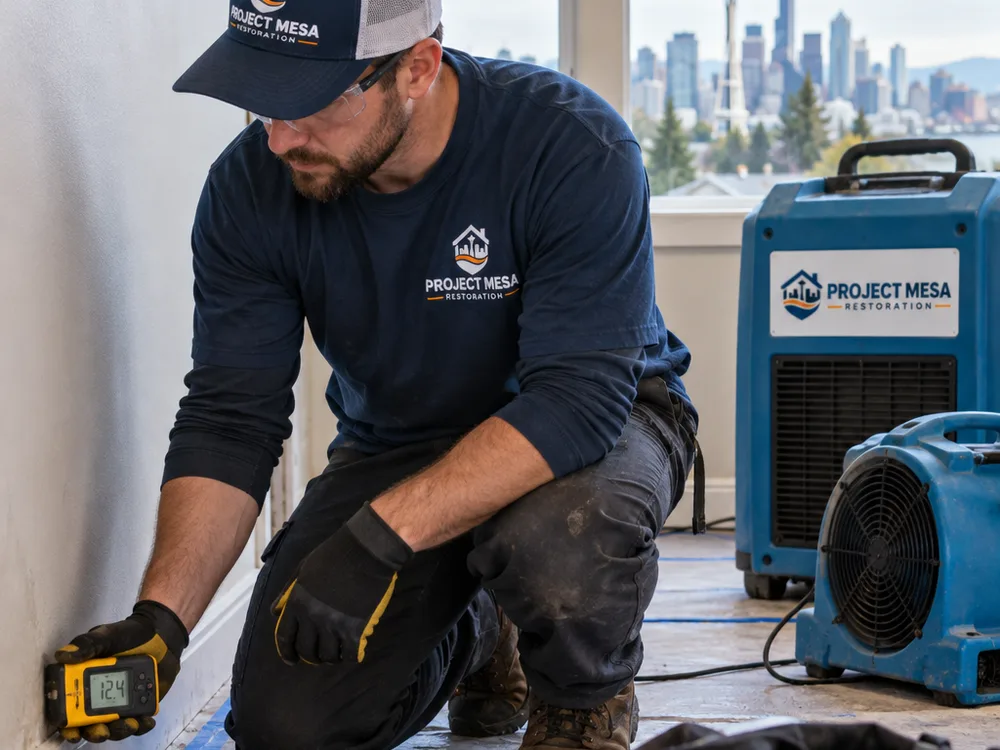
Every project starts with moisture inspection tools, including non-invasive scanning plus direct readings where needed. That tells us what is actually wet beyond what you can see on the surface, which is what makes the difference between temporary drying and real water restoration Kent outcomes.
Measured Drying, Clear Decisions
We remove standing water and saturated materials quickly using professional extraction equipment. Faster removal shortens drying time and reduces the chance of secondary damage.
Air movers and dehumidifiers are placed based on the layout, affected materials, and moisture readings. We track progress and adjust equipment as the structure dries.
If drywall, insulation, or flooring cannot be dried safely, we remove only what is necessary to access wet cavities and prevent trapped moisture.
When there is contamination risk or heavy demolition, we use containment practices to limit spread and keep the rest of the property usable when possible.
You receive notes and photos that explain what was affected, what was dried versus removed, and what remains for rebuild or finish repairs.
From Water Shutoff to Repair Plan
We confirm shutoff status, check for obvious electrical hazards, and help you plan safe access. If the source is active, stopping it is the priority before any drying begins.
We document affected rooms and materials, then use moisture detection to find wet areas behind surfaces. This step determines whether drying in place is viable or if removal is required.
We extract standing water, pull saturated pad or damaged drywall as needed, and open up cavities to allow air movement. Debris is staged for hauling and disposal.
Dehumidifiers and air movers run in controlled zones. We check moisture levels during the drying period and reposition equipment to keep drying efficient and targeted.
Once materials reach appropriate dryness goals, we provide clear next steps for water damage repair Kent work, whether that is minor patching, flooring replacement, or a larger rebuild.
Extraction, Drying, Verification


Water damage restoration in Kent typically ranges from about $1,200 to $6,500 for most residential losses, with larger or more contaminated events running higher. A small, contained leak with minimal removal may fall around $1,200 to $2,500, while multi-room drying with drywall and flooring removal more often lands in the $3,000 to $6,500+ range.
Final pricing depends on how many rooms are affected, how long materials were wet, equipment days for dehumidifiers and air movers, demolition needs, contamination level, and access to wet cavities. The exact cost is confirmed after an on-site inspection and moisture mapping.
Customer Experience
“A supply line leaked under our kitchen sink and soaked into the adjoining room. The crew found wet areas we would not have guessed, dried everything out, and explained what needed to be removed versus what could stay. The documentation helped us stay organized through the repairs.”
“We had standing water in a ground-floor unit after a backup. They showed up quickly, contained the area, and kept us updated on drying checks. The space was ready for rebuild when they said it would be.”
Practical Answers
If you have active leaking, standing water, or swelling floors, getting a professional moisture inspection quickly can prevent hidden damage inside walls and under flooring.
Tell us what happened, what areas are affected, and whether the water is still active. We will guide you through immediate safety steps and schedule an inspection to map moisture and start a clear restoration plan.