
Burst or leaking pipes
Supply lines, angle stops, and pipe joints can release a lot of water quickly. We focus on fast extraction, opening wet cavities, and drying framing so you do not end up with trapped moisture behind finishes.
Serving Seattle, Washington & surrounding areas
Water Damage Restoration · Bellevue, WA
When water shows up where it should not, time matters. We inspect, dry, and restore with a clear scope and written estimate so you know what happens next.
Water damage rarely stays put. It travels under flooring, wicks up drywall, and gets into cabinets and insulation. Bellevue water damage restoration is about stopping that spread, drying the structure the right way, and restoring what can be saved.
Project Mesa Restoration handles water damage restoration Bellevue property owners rely on after supply-line leaks, failed appliances, overflowing tubs, roof leaks, and storm-related water intrusion. Our team works in Bellevue and the greater Eastside, coordinated from Seattle. In practical terms, we bring the same disciplined approach our water damage restoration specialists serving Seattle use every day: document the loss, protect the home, dry to verifiable targets, and rebuild only what needs rebuilding.
If your home is near Downtown Bellevue or the Bellevue Way corridor, multi-story layouts and condos can mean shared walls and neighbors below. In neighborhoods like West Bellevue and Somerset, sloped lots and daylight basements make it easier for water to move to the lowest level. In Crossroads and Lake Hills, older plumbing and mid-century construction can hide slow leaks until floors cup or baseboards swell. Wherever you are, the goal is the same: a controlled drying plan, measured progress, and a clean handoff to repairs.
Find It · Dry It · Restore It
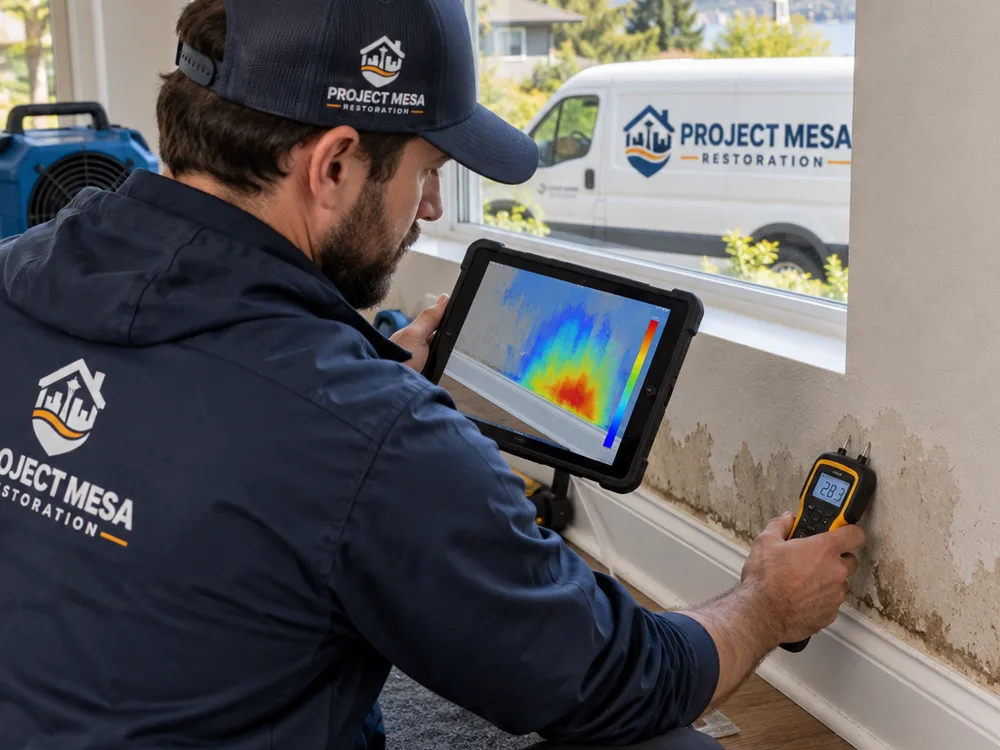
Water damage repair Bellevue homes need is more than setting a few fans. A correct restoration plan starts with finding the water source and the full extent of wet materials, then choosing drying equipment and containment that fits the situation.
Typical scope items include:
We keep the job organized so you can live around it when possible. That means protecting walkways, controlling dust, and staging equipment to reduce trip hazards and noise.
Water Losses We Handle
Supply lines, angle stops, and pipe joints can release a lot of water quickly. We focus on fast extraction, opening wet cavities, and drying framing so you do not end up with trapped moisture behind finishes.
Dishwashers, washing machines, refrigerator lines, and toilets can leak slowly or flood suddenly. We check under flooring transitions and behind toe-kicks where water often hides.
Tubs, sinks, and clogged drains can send water into adjacent rooms. If water quality is questionable, we plan cleaning and material removal before any rebuild is discussed.
Wind-driven rain can travel along framing and show up far from the entry point. We trace staining patterns and moisture readings to avoid drying only the visible spot.
Lower levels and daylight basements can collect water first. We prioritize safe access, quick extraction, and drying of slab-edge and wall bases where moisture can linger.
From Water Loss to Repair
We confirm the water is stopped, or coordinate with your plumber if needed, check for electrical safety concerns, and put protection in place for floors and contents.
We identify affected rooms and materials, including areas that may not look wet yet. You get a clear explanation of what is wet, what can be dried, and what likely needs removal.
Standing water is extracted first. If carpet pad, drywall, insulation, or cabinetry is saturated beyond practical drying, we remove it in a controlled way so drying can actually work.
We place air movers and dehumidifiers based on the moisture map and room layout. We return to track readings, adjust equipment, and document progress until dry goals are met.
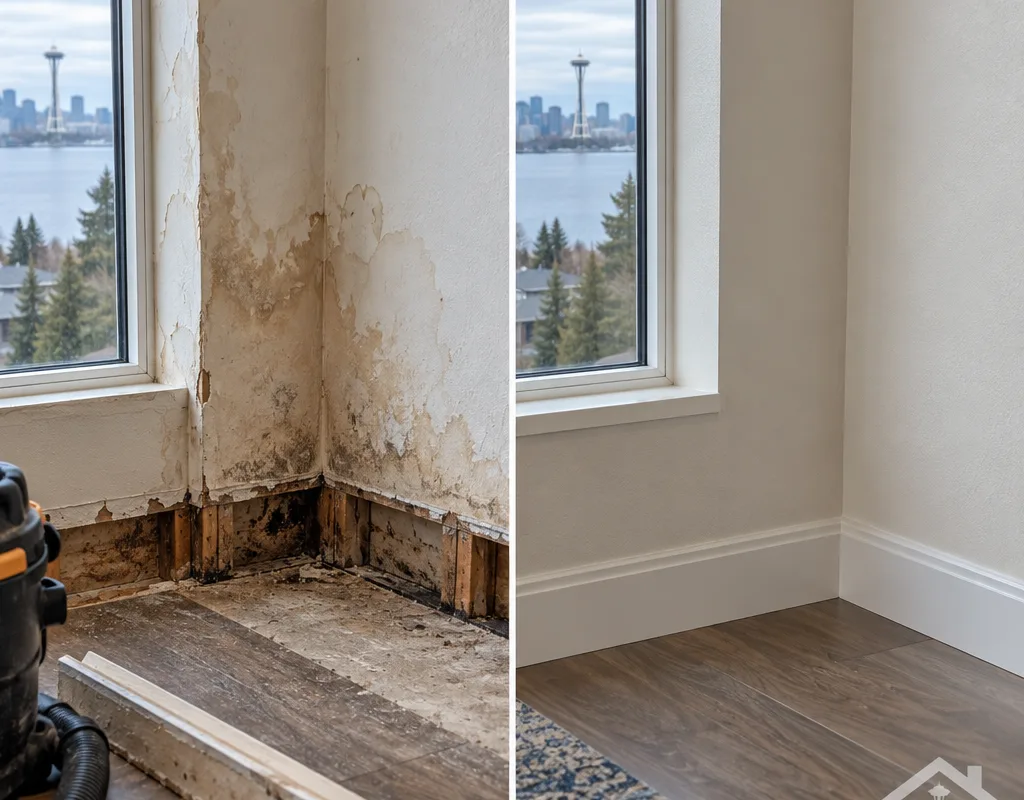
After drying, we repair what was removed or damaged: drywall, trim, flooring transitions, paint, and finish carpentry. The scope follows what the water affected, not a generic package.
Bellevue water damage restoration typically ranges from about $1,500 to $7,500 for many residential losses, while larger events with multi-room drying, demolition, and rebuild can run $10,000 to $25,000+ depending on what was affected. A small, contained leak with minimal material removal often lands at the lower end, while water that reaches multiple levels, cabinets, or hardwood floors costs more.
Final pricing depends on the water category, how long materials stayed wet, the number of rooms involved, required demolition, access—condos and tight parking can add labor—and the drying equipment runtime. The exact cost is confirmed after an on-site inspection and moisture mapping.
Measured Drying · Careful Repair
Homeowner Experiences
“A supply line leaked while we were away and the water got under our flooring. The crew explained what had to be removed, showed moisture readings each visit, and kept the area clean. Once drying was done, the repairs matched the existing trim and paint.”
“We live in a condo and were worried about water moving into the neighboring unit. They documented everything, ran drying equipment with regular checks, and coordinated the repair work so we could get back to normal.”
Practical Answers
Tell us what happened and what areas are affected. We will schedule an inspection, map the moisture, and provide a clear restoration plan with a written scope before repairs begin.