
Containment-first cleanup
Soot is easy to spread. We isolate affected areas, control airflow, and use HEPA filtration so cleanup does not create a bigger mess through the home.
Serving Seattle, Washington & surrounding areas
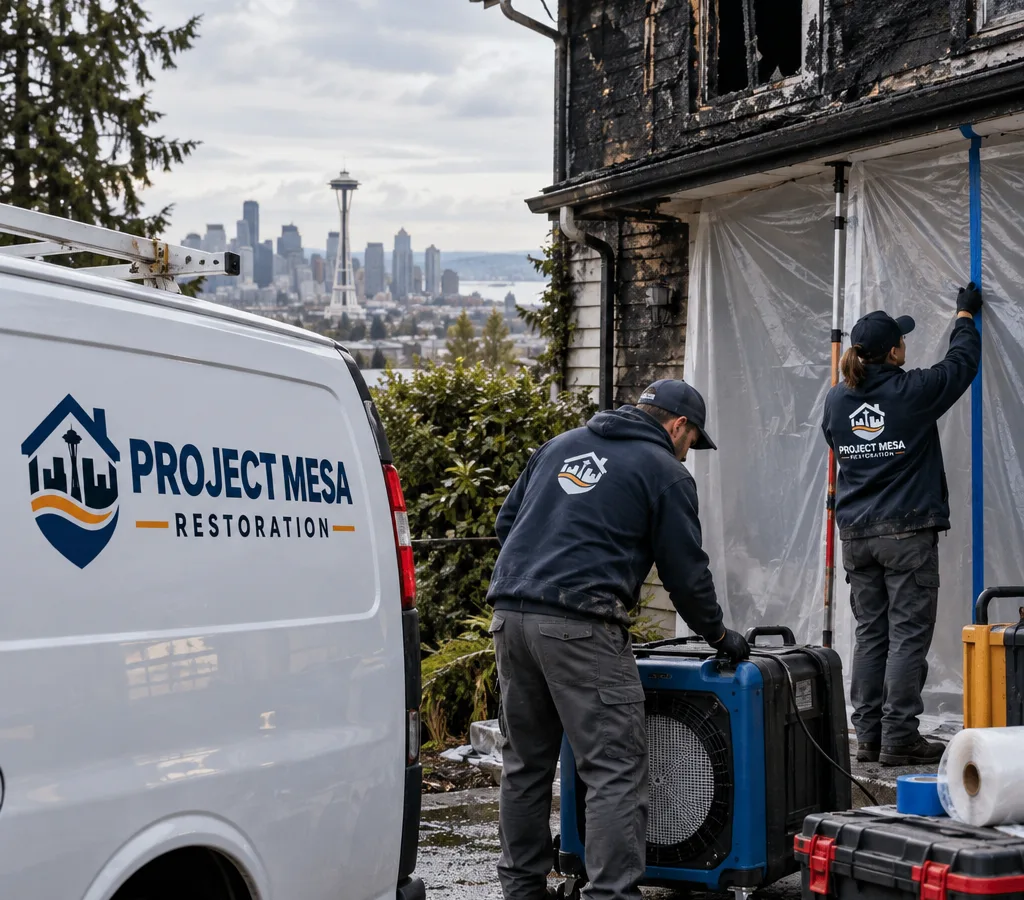
Fire Damage Restoration · Seattle, WA
Soot, smoke, and water from firefighting can keep damaging your home long after the flames are out. Get a clear plan, careful cleanup, and skilled repairs so you can move forward safely.
Fire damage restoration Seattle homeowners need is rarely just “cleaning up.” Fire leaves a mix of problems that require the right order of work: structural and electrical safety checks, soot and smoke residue removal, deodorization, and repairs. On top of that, water used to put the fire out can soak framing, drywall, and contents, which adds drying and mold-prevention steps.
Project Mesa Restoration starts with a jobsite-safe plan: stabilize hazards, limit cross-contamination, document conditions for the claim if you are using insurance, then begin targeted demolition only where materials are unsalvageable. For clients dealing with both smoke and water impact, our crew also works as Seattle’s water damage restoration specialists so drying, dehumidification, and monitoring can be handled in the same coordinated scope.
Seattle Fire Restoration
Seattle housing includes a lot of older wood-frame construction, plus condos and townhomes with shared walls. That changes how fire restoration is handled. In a single-family home in Ballard or Greenwood, smoke often travels through attic bays and wall cavities, so deodorization and sealing steps have to match how the home was built. In Capitol Hill apartments or Belltown condos, the focus is frequently containment, negative air, and protecting common areas so soot does not spread into hallways and neighboring units.
In the rainy season, indoor humidity makes drying slower, especially when wet insulation or charred cavities are opened up. We plan for controlled drying, continuous filtration (HEPA air scrubbers), and careful material handling so the structure can be rebuilt without locking odor into the substrate.
Typical fire restoration Seattle projects include:
Controlled Cleanup and Recovery
Soot is easy to spread. We isolate affected areas, control airflow, and use HEPA filtration so cleanup does not create a bigger mess through the home.
Some items clean well, others do not. We separate salvageable contents from porous materials that typically hold odor, then build the restoration plan around that reality.
Deodorization is chosen to match the situation, not the trend. We may use hydroxyl generators for occupied-safe treatment or other methods when conditions call for it.
We document affected areas and communicate what is being removed, cleaned, sealed, or replaced so you can make informed choices during a stressful time.
Restoration is only done when your home is livable and finished. After mitigation and cleaning, we can coordinate the repair scope so you are not juggling multiple handoffs.
From Stabilization to Rebuild
We check for unsafe conditions, secure openings, and identify immediate risks like unstable materials, lingering smoke odor sources, and wet areas that need prompt drying.
You get a written scope that matches the damage observed. If insurance is involved, we document what is affected and why certain materials must be removed or specialized cleaning is required.
We set containment and negative air as needed, then remove charred and unsalvageable materials. The goal is to stop soot migration and make the space safe to work in.
We use a combination of dry soot removal, HEPA vacuuming, and wet cleaning methods based on the surface type, including painted drywall, wood framing, masonry, and metal.
After cleaning, we address odor in cavities and porous areas. Where appropriate, we apply sealers to lock down remaining staining and odor so it does not bleed through finishes later.
If firefighting water affected the home, we dehumidify and monitor moisture levels so rebuild work starts on dry materials, not damp framing or subfloor.
We repair and rebuild affected areas, then walk the project with you to confirm the scope is complete and the home is ready for normal use.
Fire damage restoration in Seattle typically ranges from about $3,000 to $12,000 for smaller, contained losses, while larger fires with extensive soot penetration, demolition, drying, and rebuild coordination often run $20,000 to $75,000+ depending on the structure and finishes.
Your price depends on how far smoke traveled, including attics and wall cavities, how much material must be removed, the need for HEPA containment and odor treatment, water damage drying time, contents handling, and access constraints common in condos and dense neighborhoods. The exact cost is confirmed after an on-site inspection and written scope.
Customer Experience
“After a small kitchen fire, the smell was everywhere and the soot kept reappearing. The team set up containment, explained what could be cleaned versus replaced, and the odor treatment actually worked. The rebuild plan was straightforward, which helped us make decisions quickly.”
“We live in a condo and were worried about smoke spreading into the hallway. They ran negative air, kept the common area clean, and coordinated with the building so the work stayed organized. Communication was consistent the whole time.”
Practical Answers
Tell us what happened and what areas were affected. We will inspect the damage, explain what can be cleaned versus replaced, and outline the steps to restore your home safely.