
Burst or leaking supply lines
Failed angle stops, pinhole leaks, and burst pipes can saturate drywall and flooring quickly. Early extraction and cavity drying often reduces how much has to be removed.
Serving Seattle, Washington & surrounding areas
Water Damage Restoration · Redmond, WA
Fast mitigation for leaks, flooding, and burst pipes. We contain the spread, dry the structure, document conditions, and rebuild damaged areas with a clear plan from the start.
Water damage Redmond problems move fast: water can wick into drywall, soak insulation, creep under flooring, and collect in wall cavities where you cannot see it. The earlier the affected area is contained and dried, the more you can usually preserve.
Project Mesa Restoration handles water damage restoration in Redmond for residential and light commercial properties. Our team focuses on practical, step-by-step mitigation: stop the spread, protect materials that can be saved, dry the structure to a verifiable target, and then complete the water damage repair so the space is usable again.
Our crews are based in the Seattle area, and we bring that same response discipline to Redmond jobs. You are working with an experienced water damage restoration team in Seattle that documents conditions and communicates the plan before demolition starts.
Extraction, Drying, and Repair
A proper Redmond water damage restoration project is more than pulling up a wet carpet. The scope depends on where the water traveled and how long materials stayed wet, but most jobs include a combination of the steps below.
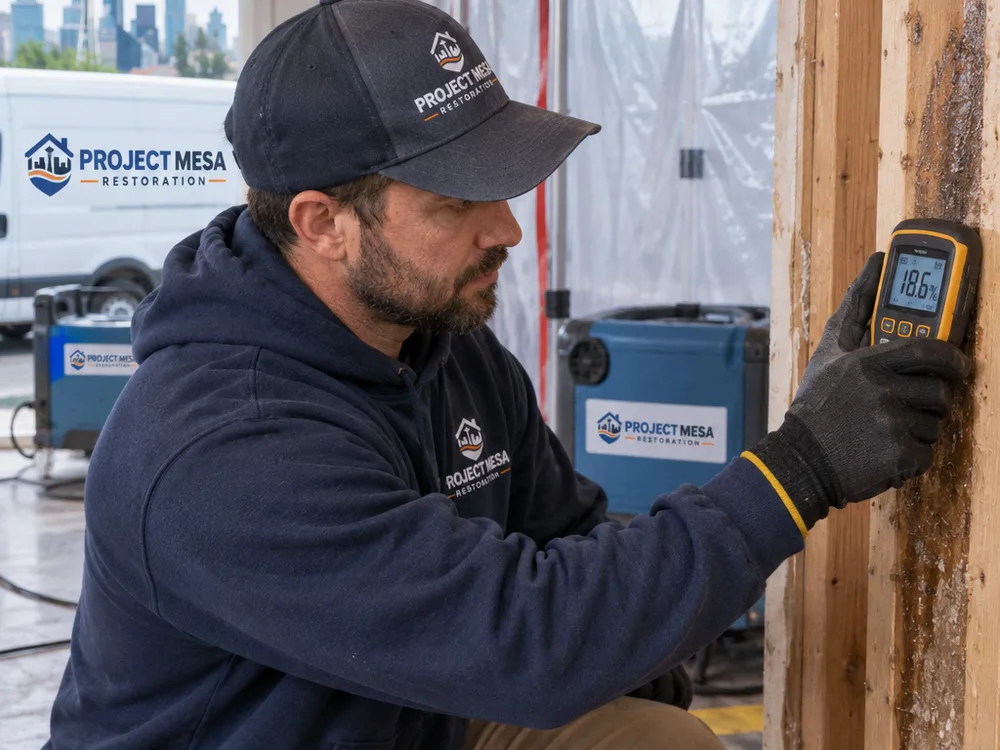
First, we identify the source and category of water—clean supply line, gray water from appliances, or contaminated water from backups. Then we isolate the work area as needed and remove materials that cannot be dried safely. Drying is done with professional air movers and dehumidifiers, and we monitor moisture in framing and drywall with moisture meters, not guesswork.
When the structure is dry, we transition into water damage repair in Redmond: replacing drywall and insulation, reinstalling trim and flooring, and restoring affected rooms back to pre-loss condition as closely as practical. If the damage involves cabinetry, doors, or built-ins, we will outline what can be dried and what must be replaced so you can make informed choices.
Local note: Redmond homes near the Sammamish River corridor, Bear Creek, or wooded lots often have more hidden pathways for moisture because of crawlspaces and tight framing bays. That makes targeted moisture checks and controlled drying especially important before repairs are closed up.
Sources and Conditions
Failed angle stops, pinhole leaks, and burst pipes can saturate drywall and flooring quickly. Early extraction and cavity drying often reduces how much has to be removed.
Dishwashers, refrigerators, toilets, and water heaters can leak slowly and damage subfloors and cabinets. We trace migration paths and dry below and behind finishes.
Wind-driven rain can show up as staining, bubbling paint, or wet insulation. We dry structural elements and document suspected entry points so the underlying issue can be addressed.
Standing water in basements and crawlspaces can raise humidity and affect framing. We pump out water when present, dry the space, and check for elevated moisture in joists and sill plates.
When water is contaminated, safety and controlled removal matter. We use appropriate PPE, disposal practices, and cleaning steps based on the water category.
From Loss to Recovery
We inspect the visible damage and then check surrounding areas with moisture meters and thermal imaging where appropriate. You get a written scope outline so the next steps are clear.
We protect unaffected areas, set up containment when needed, and extract standing water with professional pumps and extractors. Faster extraction usually shortens drying time.
If drywall, insulation, padding, or warped materials cannot be dried safely, we remove them strategically to expose wet cavities. The goal is access for drying without unnecessary tear-out.
Air movers and dehumidifiers run in a planned layout. We track moisture levels and adjust equipment placement so drying stays effective and predictable.
After drying, we clean affected surfaces and address odors when needed. Then we move into water damage repair: drywall, paint prep, flooring transitions, and finish carpentry as the scope calls for.
Water damage restoration in Redmond typically ranges from about $1,500 to $7,500 for smaller, contained losses, while larger multi-room losses or projects needing significant rebuild work can run $10,000 to $30,000+.
Final pricing depends on how far water spread—including below flooring and inside walls—water category, the amount of demolition required for access, drying duration and equipment needs, and which finishes must be rebuilt. The exact cost is confirmed after an on-site inspection and moisture mapping.
Homeowner Experiences
“A supply line leak soaked our laminate and baseboards overnight. The crew explained what had to come out, set up drying the same day, and kept us updated with moisture readings until everything was dry.”
“We had water travel into an adjacent room and down toward the crawlspace. They found the wet areas we would have missed and the repairs matched the existing trim better than we expected.”
Practical Answers
Tell us what happened and where the water traveled. We will schedule an inspection, map moisture, and provide a clear scope for drying and repairs so you can make decisions quickly.